Asphalt lifespan in the Bay Area: How long does pavement really last?
Key factors that influence asphalt lifespan in the Bay Area and how proactive care can keep pavement performing longer.


Key factors that influence asphalt lifespan in the Bay Area and how proactive care can keep pavement performing longer.
When property managers, HOAs, and business owners invest in new pavement, one of the first questions that comes up is: “How long will this asphalt last?” The answer depends on several factors—including the environment, traffic loads, and maintenance practices.
In California, and particularly in the Bay Area, the lifespan of asphalt can vary significantly compared to other regions of the country. While asphalt in colder climates may deteriorate quickly due to freeze-thaw cycles, the Bay Area has its own unique challenges: seasonal rains, coastal humidity, strong sun exposure, and heavy vehicle traffic in urban areas.
With proper asphalt maintenance, Bay Area pavement can last 20 to 30 years or more. Without care, that same surface may deteriorate in as little as 10 to 15 years.
Several factors combine to determine how long your pavement will hold up.
Together, these factors explain why two properties built around the same time may have very different outcomes—one looking fresh after 20 years, the other already in need of major replacement.
The earliest warning signs are often subtle: hairline cracks, faded color, or small patches of standing water. Over time, these progress to more serious problems:
If repairs are becoming frequent and widespread, it’s often more cost-effective to plan for resurfacing or replacement rather than continuing with piecemeal fixes.
The difference between 10 years of service and 30 years often comes down to one thing: maintenance.
Sealcoating is one of the most effective ways to protect asphalt from UV rays, moisture, and chemical spills. In the Bay Area, applying a sealcoat every 2–3 years can dramatically slow deterioration while restoring that fresh black finish. Crack filling is equally important, since even the smallest fissure can let water in and start undermining the base.
Drainage also can’t be ignored. Clearing debris from catch basins and ensuring water flows away from the pavement keeps the structure intact during the rainy season. And when surface wear does occur, resurfacing with an asphalt overlay can add another decade or more of use without the cost of full replacement.
Every region has different challenges, and California is no exception. In the Bay Area:
So, how long does asphalt last in the Bay Area climate? With proactive care, a pavement surface can remain safe and functional for 20–30 years or more. Without it, you may be facing major repairs in half that time.
The good news is that regular maintenance—sealcoating, crack repair, drainage upkeep, and timely resurfacing—does more than extend the asphalt lifespan California properties can achieve. It also reduces long-term costs, protects against liability, and ensures your site looks professional year after year.
At Pacific Surfacing, we specialize in asphalt maintenance that Bay Area businesses and HOAs can count on. By pairing technical expertise with knowledge of local conditions, we help clients get the most out of every square foot of pavement.
Building trust, long-term value, and accessible spaces for all.
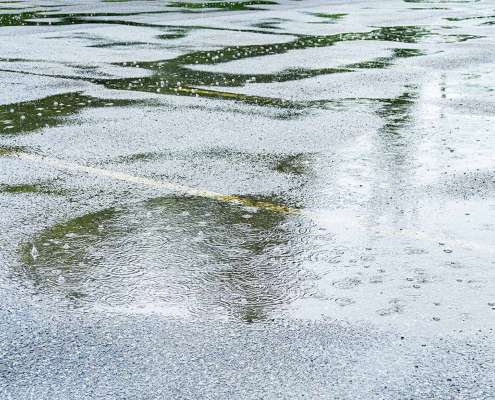 https://pacificsurfacing.com/wp-content/uploads/2026/09/ps-what-el-nino-means-for-your-parking-lot.jpg 1109 1500 hello@thepointcollective.com https://pacificsurfacing.com/wp-content/uploads/2025/09/PS_logo_rgb_notagline.png hello@thepointcollective.com2026-09-28 11:44:372026-10-02 09:11:39What El Niño means for your parking lot
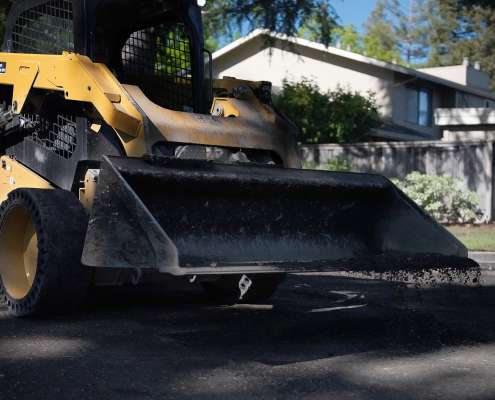 https://pacificsurfacing.com/wp-content/uploads/2025/11/Asphalt-Lifespan.jpg 1229 1638 hello@thepointcollective.com https://pacificsurfacing.com/wp-content/uploads/2025/09/PS_logo_rgb_notagline.png hello@thepointcollective.com2025-11-11 10:09:142026-09-10 11:14:25Asphalt lifespan in the Bay Area: How long does pavement really last?
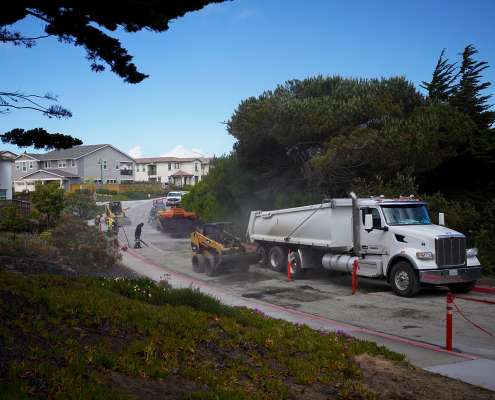 https://pacificsurfacing.com/wp-content/uploads/2025/11/Commercial-Paving.jpg 1229 1638 hello@thepointcollective.com https://pacificsurfacing.com/wp-content/uploads/2025/09/PS_logo_rgb_notagline.png hello@thepointcollective.com2025-11-09 08:54:322026-09-10 11:19:06Commercial paving process: From site prep to final surface

 Trip hazard prevention: Keeping your property safe and ADA compliant

