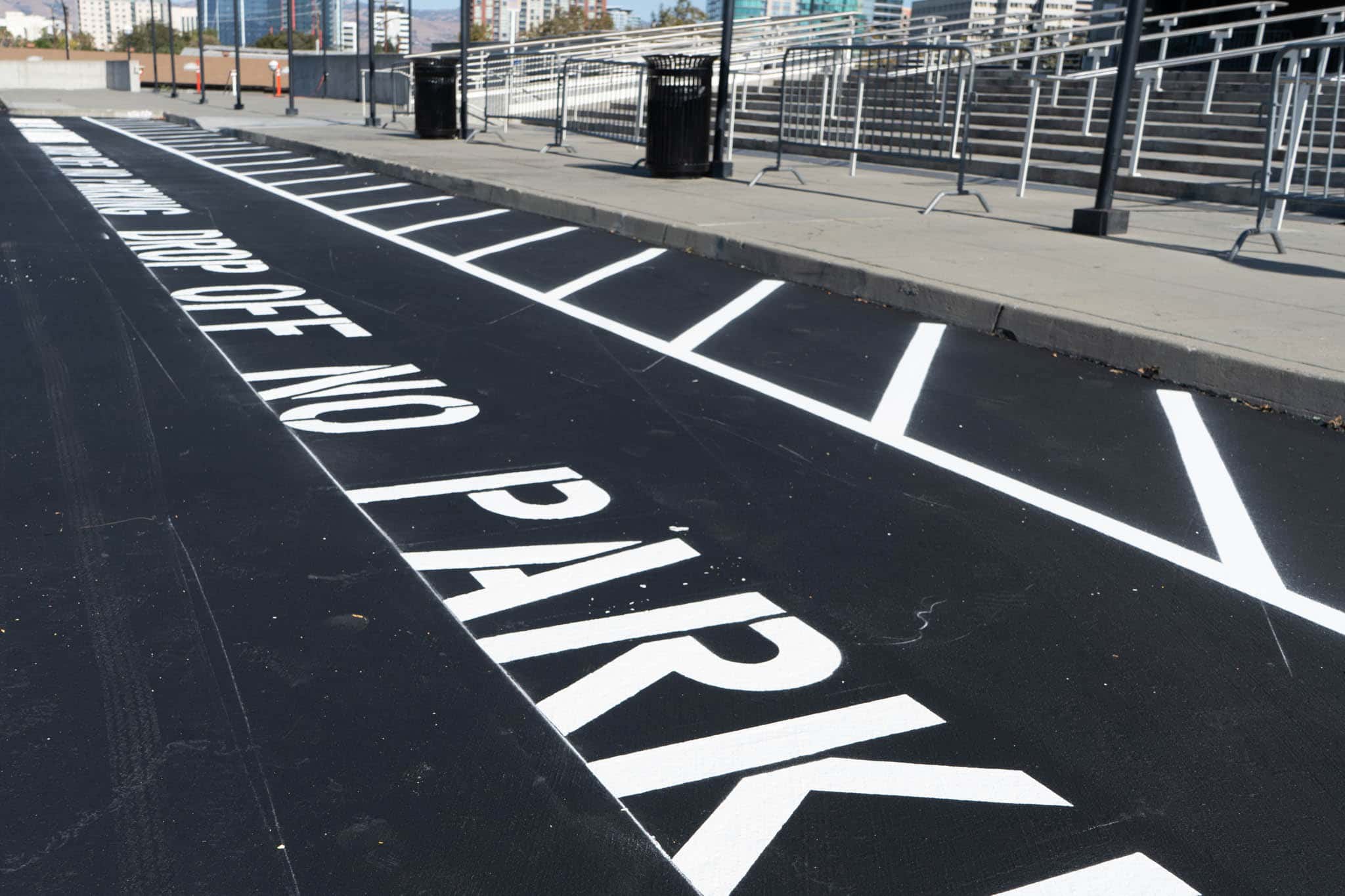
Parking lot line fading: When to restripe and why it matters
What causes parking lot lines to fade, when restriping becomes necessary, and what a consistent maintenance schedule should look like for commercial and HOA properties.
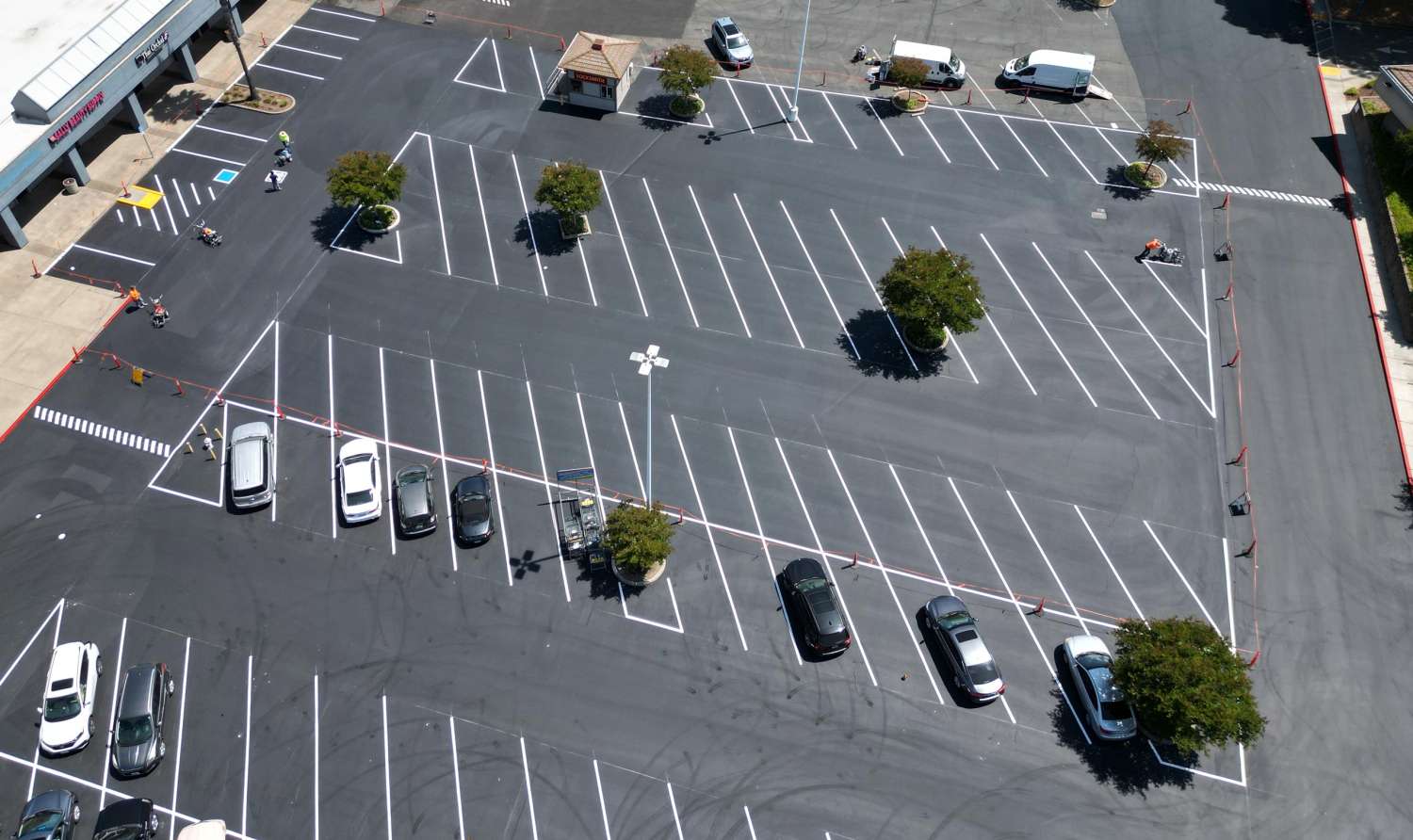

What causes parking lot lines to fade, when restriping becomes necessary, and what a consistent maintenance schedule should look like for commercial and HOA properties.
Parking lot lines fade gradually, which is part of why they often go unaddressed until markings are barely visible. By that point, the property is already carrying real exposure.
Faded striping reduces traffic safety, creates ambiguity around accessible parking and fire lanes, and signals to tenants and customers that the property is not being well maintained. For commercial properties and HOAs, it also creates liability risk that is worth taking seriously.
Several factors determine how quickly pavement markings deteriorate. Understanding them helps property managers plan restriping proactively rather than reactively.
Sunlight is the primary driver of paint degradation. UV rays break down the binders in traffic paint, causing color to wash out and adhesion to weaken. In Northern California, where sun exposure is significant year-round, this process is accelerated compared to more temperate climates.
Vehicle tires grind paint off the surface over time. Drive aisles and entrance areas tend to show fading much earlier than stalls in lower-traffic areas of the lot. High-volume retail, medical, and mixed-use properties see the most rapid deterioration.
New asphalt is porous and absorbs paint well. Older, oxidized pavement has a harder, smoother surface that does not hold paint as effectively. Cracked or deteriorating asphalt accelerates fading further because moisture gets under the paint film and lifts it from below.
Pressure washing, sweeping, and chemical treatments all wear down paint. Properties that are swept regularly or cleaned with strong detergents will often see striping fade faster than lots that receive lighter maintenance attention.
Not all traffic paint performs the same way. Water-based latex paints are common and economical but fade faster under heavy use. Solvent-based and thermoplastic markings offer greater durability in high-traffic areas. Application thickness and surface preparation at the time of original striping also directly affect how long markings last.
In California, property owners have a legal duty to maintain safe conditions on their premises. Poorly defined parking stalls and traffic flow markings can contribute to accidents, and when they do, the property owner may face negligence claims.
The most common risk areas include:
Keeping documentation of a consistent restriping schedule is one of the more straightforward ways a property manager can demonstrate reasonable maintenance practices in the event of an incident.
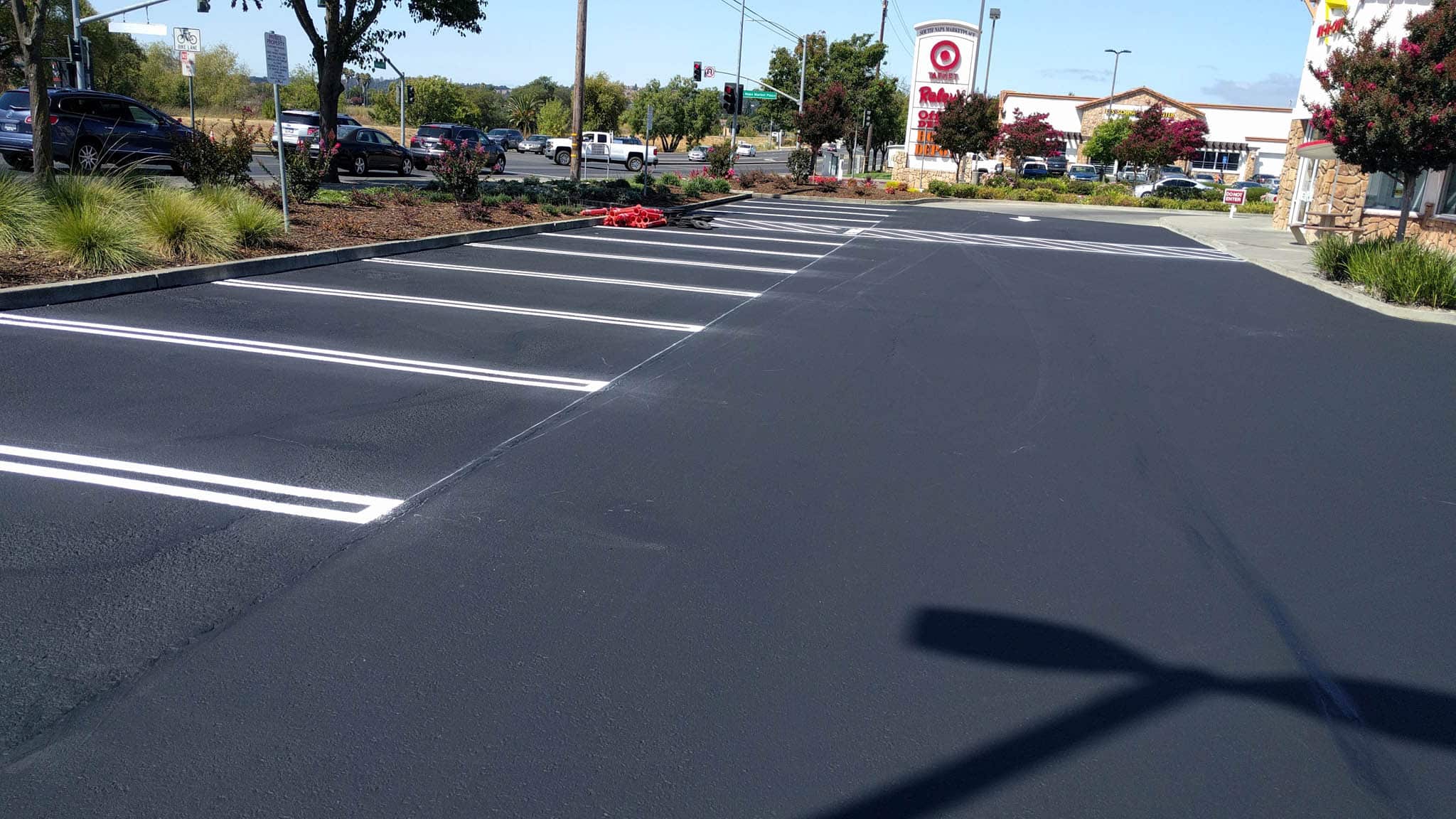
For most commercial lots with average traffic, a full restripe every two to three years is a reasonable baseline. Lots that are sealcoated on a regular schedule should be restriped immediately after each sealcoating application, since sealcoat covers existing markings entirely.
Shopping centers, grocery-anchored retail, and mixed-use developments with daily high-volume traffic may need restriping every 18 to 24 months. Drive aisle markings and pedestrian crossings tend to deteriorate fastest and should be inspected at least annually.
Residential community lots generally see lower traffic volume and may need restriping every three to five years depending on the number of units and parking density. Visitor areas and main entry aisles tend to wear faster and often benefit from spot restriping in between full cycles.
A straightforward evaluation is to look at the lot from the perspective of a driver entering for the first time. If stall boundaries, directional arrows, stop bars, and pedestrian paths are not immediately clear, the markings are no longer doing their job.
You can also look for contrast between the paint and the pavement surface. If white or yellow paint blends into the surrounding asphalt with little visible difference, fading has reached a point where restriping should be scheduled.
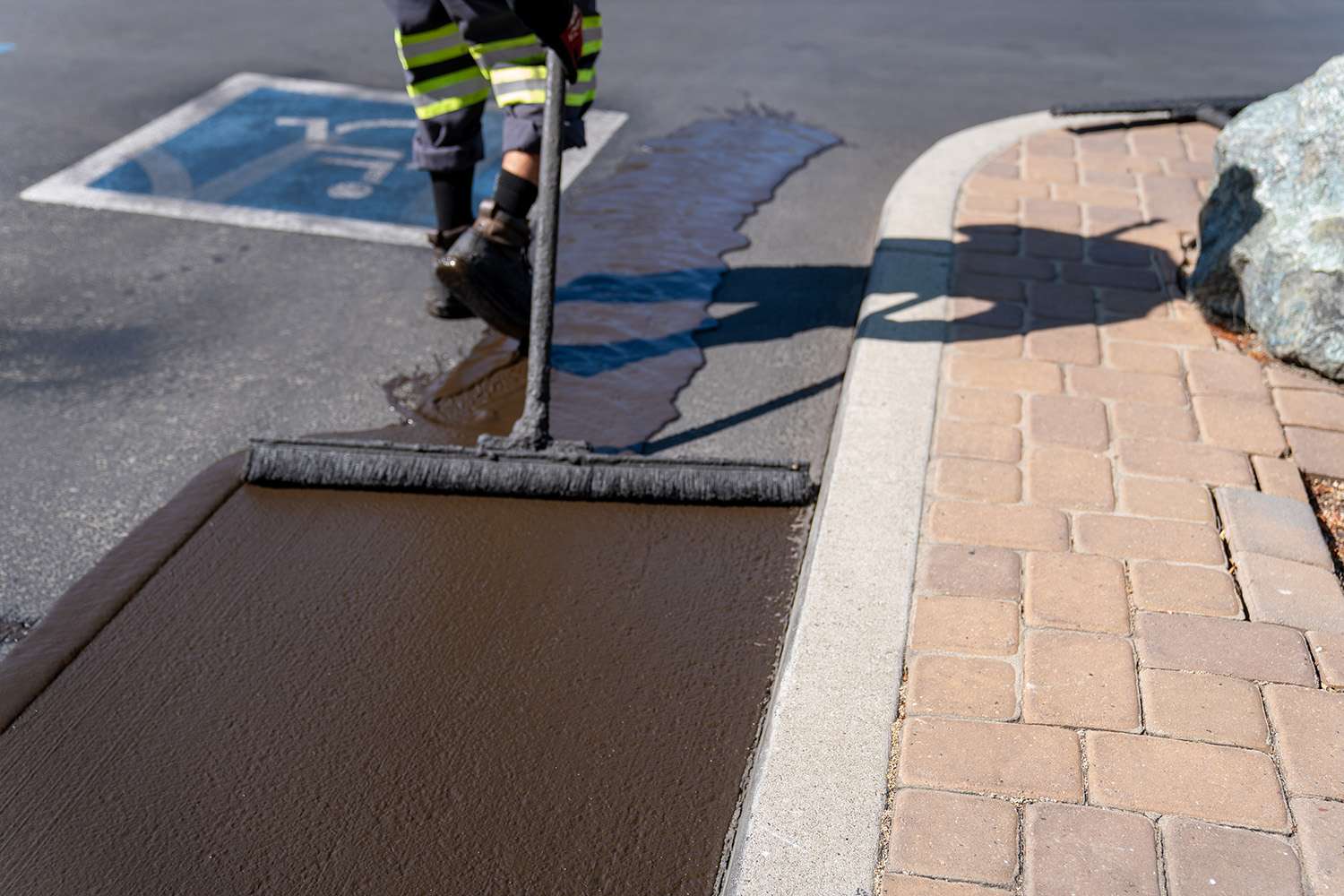
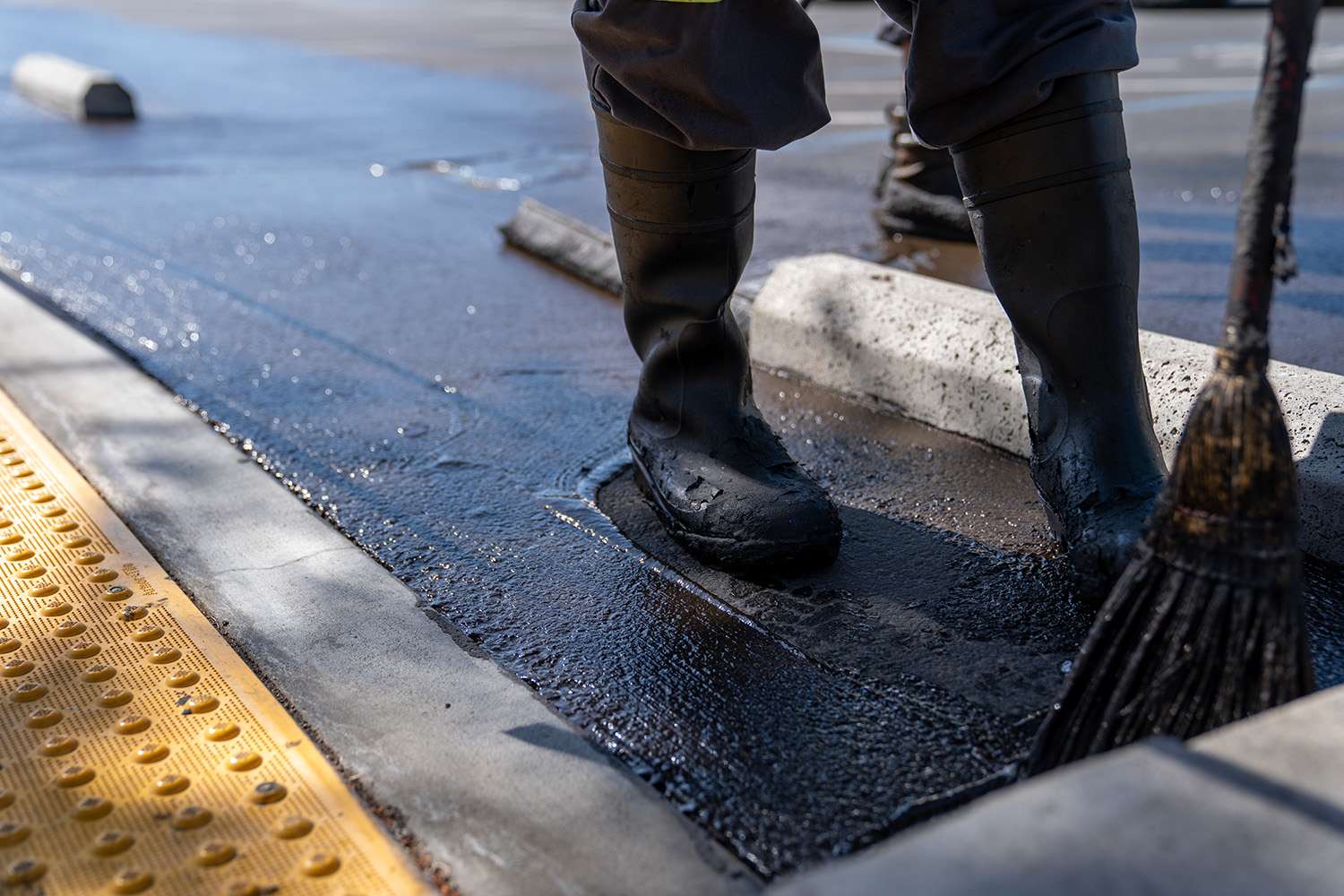
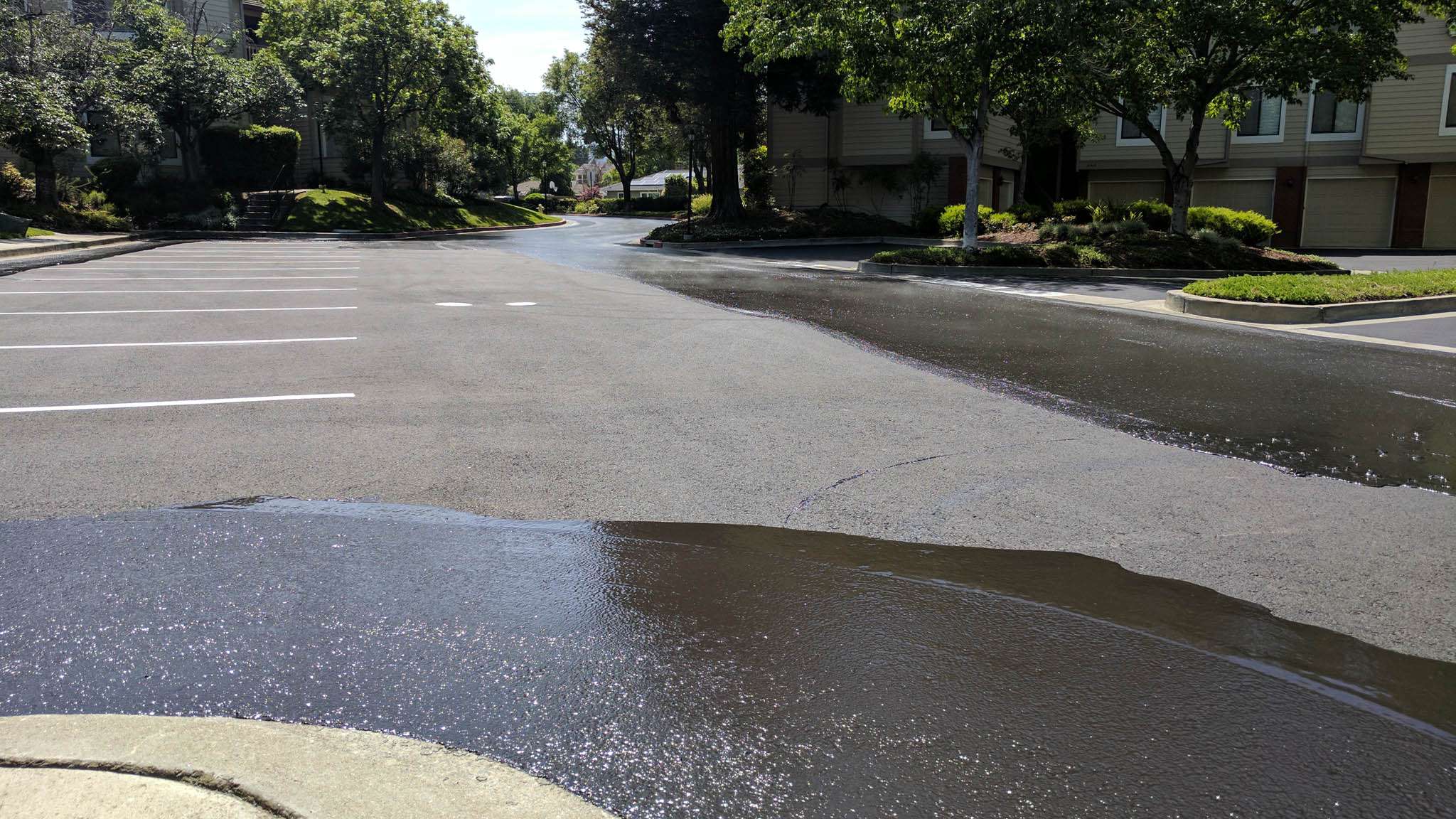
One of the most common situations where restriping is needed is immediately following a sealcoating project. Sealcoat is applied over the entire pavement surface, which means existing markings are covered and must be reapplied once the sealcoat has cured.
This is also an opportunity to evaluate and update the lot layout before new lines go down. Pacific Surfacing routinely coordinates sealcoating and restriping as a combined project, which allows property managers to address layout adjustments, ADA updates, and directional changes in a single mobilization.
Staying ahead of striping deterioration is less expensive than reacting to it. Catching markings at the fading stage means a standard repaint. Waiting until they are gone can mean additional surface prep and a more involved project.
Consistent maintenance also communicates something real to the people using your property. A well-marked lot tells tenants, customers, and residents that the property is being managed with care. That perception has real value, particularly in competitive commercial and HOA markets.
At Pacific Surfacing, we provide commercial restriping services across Northern California and have been doing so for over 40 years. If you are unsure about the condition of your parking lot markings, we are happy to walk the lot with you and give an honest assessment. Contact us to schedule a site visit or request a quote.
Building trust, long-term value, and accessible spaces for all.
 https://pacificsurfacing.com/wp-content/uploads/2026/04/PS_sustainable-asphalt_v3.jpg 1109 1500 hello@thepointcollective.com https://pacificsurfacing.com/wp-content/uploads/2025/09/PS_logo_rgb_notagline.png hello@thepointcollective.com2026-03-30 08:43:222026-09-10 10:59:22How to combine sealcoating + striping redesign to improve traffic flow and safety
 https://pacificsurfacing.com/wp-content/uploads/2026/03/DSC06745-scaled.jpg 1707 2560 hello@thepointcollective.com https://pacificsurfacing.com/wp-content/uploads/2025/09/PS_logo_rgb_notagline.png hello@thepointcollective.com2026-03-23 12:16:522026-09-10 11:04:47Preparing your pavement for sealcoating: Why proper prep work determines long-term results
 https://pacificsurfacing.com/wp-content/uploads/2026/03/DJI_0340_updated.jpg 1500 2000 hello@thepointcollective.com https://pacificsurfacing.com/wp-content/uploads/2025/09/PS_logo_rgb_notagline.png hello@thepointcollective.com2026-03-16 10:16:182026-09-10 11:06:34Preparing residents, tenants and employees for sealcoating day
 What El Niño means for your parking lot