Understanding concrete paving
Explore the confusion with concrete paving, the role of concrete pouring, and how to determine your needs for your next project.

Explore the confusion with concrete paving, the role of concrete pouring, and how to determine your needs for your next project.
The term “concrete paving” often generates confusion for those seeking commercial construction services. While the phrase is frequently searched online, many who type it are likely looking for something different: concrete pouring for specific applications like sidewalks, dumpster pads, ramps, and patios. On the other hand, “concrete paving” might also refer to interlocking concrete pavers, a distinct product and process. If you’re searching for solutions for commercial concrete installations, this article will help clarify what “concrete paving” entails and guide you toward the services you actually need.
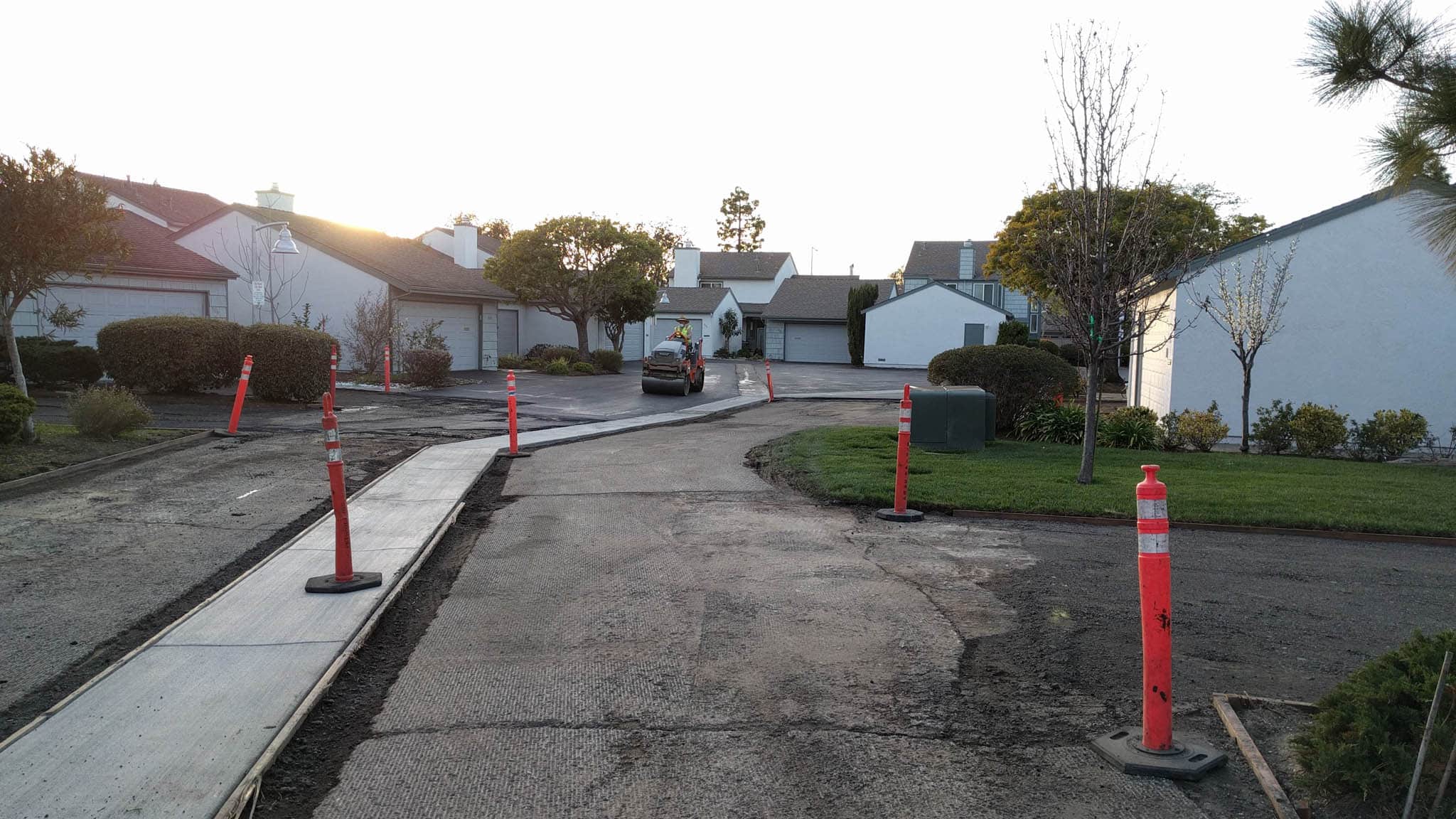
Concrete paving traditionally refers to the process of creating large, smooth, flat surfaces—think of highways, parking lots, and expansive industrial floors. These projects often involve a specialized paving machine that lays and levels concrete across vast areas. However, for most commercial applications like sidewalks, ramps, and dumpster pads, this definition may not align with your needs.
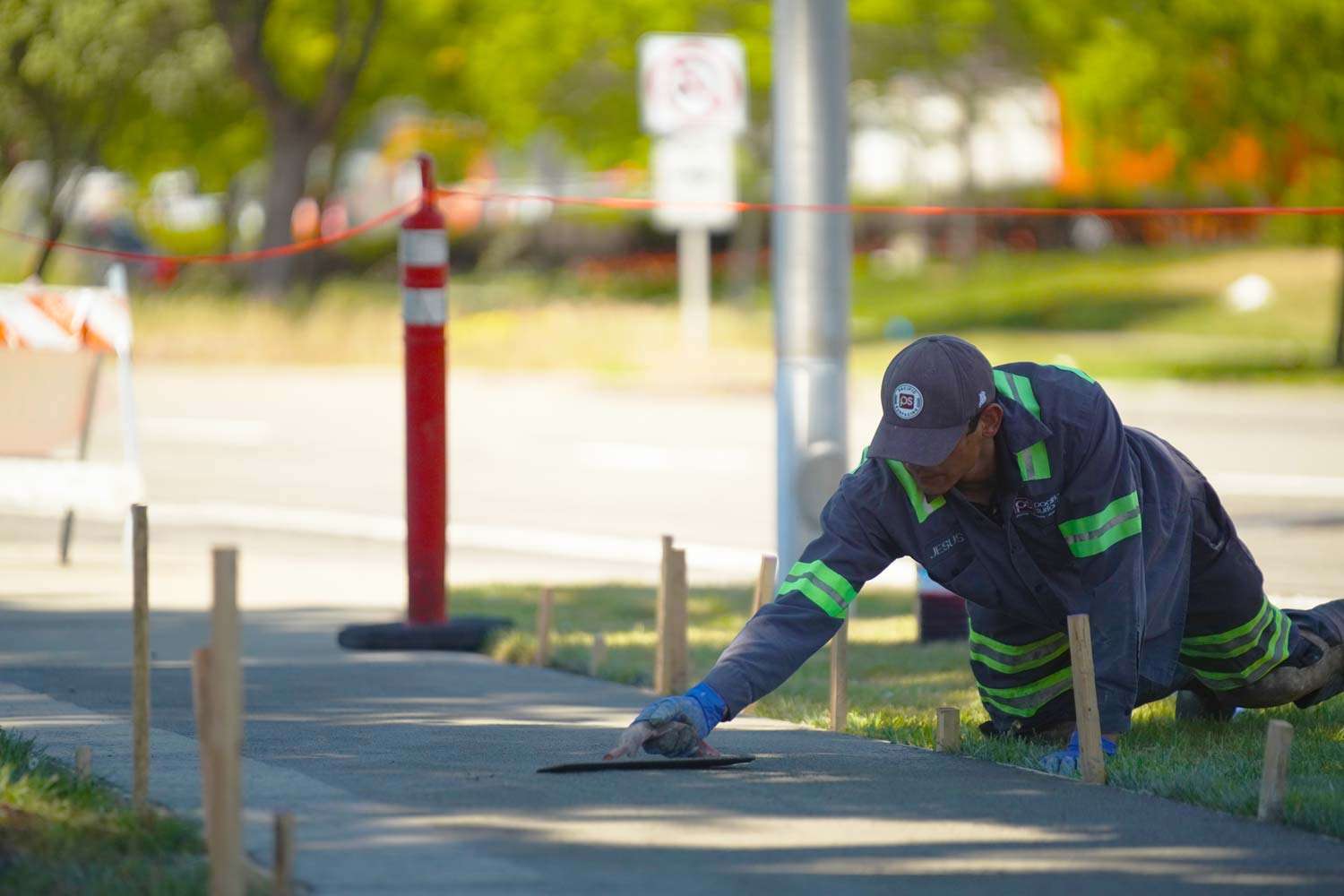
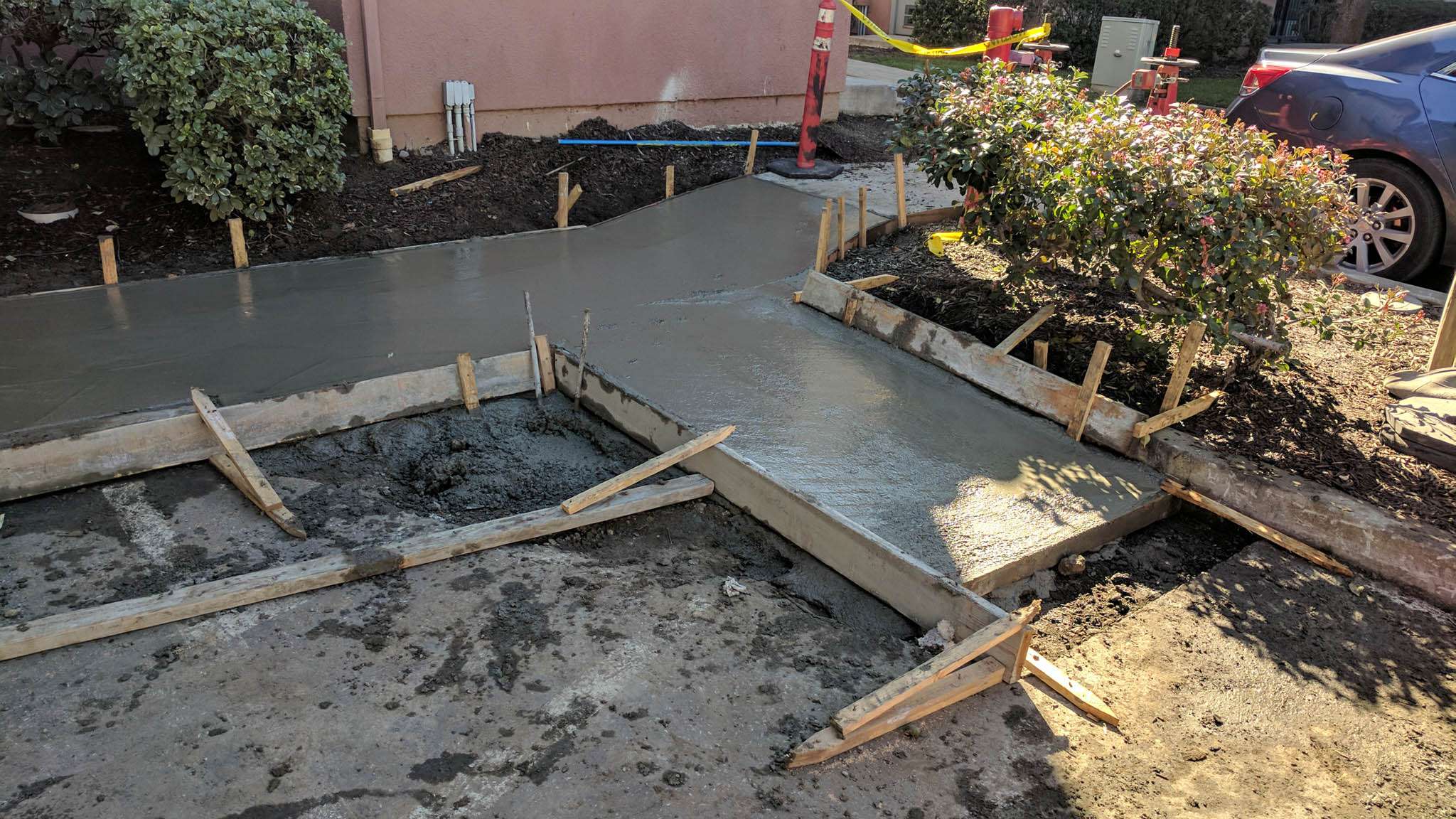
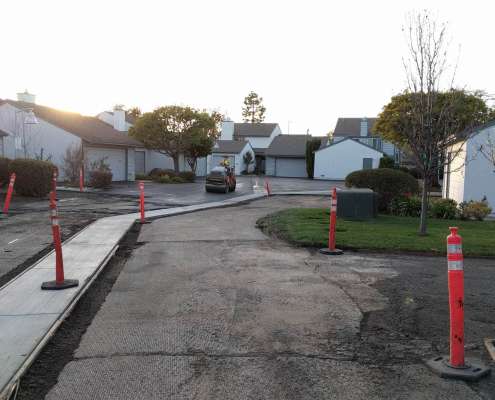
If you’re not looking for large-scale paving or decorative concrete pavers, you’re likely seeking concrete pouring services. Concrete pouring involves the precise placement and finishing of concrete in forms to create smaller, highly functional structures such as:
“Concrete paving” is often mistaken for concrete pavers—small, modular blocks used for decorative driveways, patios, and walkways. While attractive and customizable, concrete pavers are typically associated with residential or decorative landscaping projects, not the heavy-duty commercial needs like dumpster pads or sidewalks.
If you’re managing a commercial property, you may not need traditional concrete paving machines designed for highways or airstrips. Instead, you’re likely looking for smaller-scale, labor-intensive projects requiring skilled crews and precision.
Concrete pouring is the appropriate method for creating functional, durable structures tailored to commercial needs. Unlike paving, which implies mechanical spreading, pouring involves setting forms, reinforcing with rebar, and finishing concrete by hand or with smaller machinery for targeted applications.
Dumpster pads are essential for maintaining cleanliness and functionality in commercial properties. They are reinforced to handle the weight of heavy garbage trucks and resist the constant abrasion from containers being dragged across the surface.
For commercial developments, sidewalks must meet local codes and ADA compliance standards. Concrete pouring ensures smooth, durable, and properly sloped surfaces for accessibility and safety.
ADA-compliant ramps are critical for accessibility. Precision concrete pouring ensures these ramps meet both functional and aesthetic needs, reducing trip hazards and liability risks.
Concrete approaches provide smooth transitions between surfaces, such as between a parking lot and a building. Properly poured and finished landings ensure durability and curb appeal.
While patios are often considered residential, commercial spaces such as restaurants or office parks also require durable, aesthetically pleasing concrete features.
Properly poured concrete provides a long-lasting surface resistant to cracking, erosion, and wear, even in high-traffic areas.
From sloped ramps to flat pads, concrete pouring adapts to the specific needs of your property.
Professionally poured concrete ensures adherence to safety regulations and ADA requirements, reducing liability.
Concrete is a low-maintenance material, offering significant savings over time for commercial properties.
Pacific Surfacing specializes in concrete pouring for commercial projects, ensuring the strength, functionality, and compliance your property requires.
We understand the specific needs of businesses in the Bay Area, from climate considerations to local regulations.
We work closely with you to design and implement solutions tailored to your property’s unique requirements.
We use top-grade concrete and reinforcement methods to ensure the longevity and safety of your project.
Not every project aligns with our commercial expertise. If you’re seeking:
What is the purpose of your concrete installation? Are you creating functional surfaces, addressing accessibility, or enhancing curb appeal?
Will the surface handle heavy vehicles like garbage trucks or foot traffic from pedestrians? This will determine the thickness and reinforcement needed.
ADA compliance is critical for ramps, sidewalks, and other public-facing structures.
A knowledgeable contractor will guide you toward the right solution for your needs, whether it’s concrete pouring or a different approach entirely.
The term “concrete paving” can mean different things depending on who you ask, but for most commercial property managers, it’s not about decorative pavers or highway-grade installations. Instead, you’re likely looking for precise, durable concrete pouring for applications like sidewalks, dumpster pads, and ramps.
By understanding what you need and hiring the right professionals, you can ensure your project meets all functional and compliance requirements. If you’re unsure about the terminology or scope of your project, reach out to a contractor experienced in commercial concrete pouring to guide you toward the best solution.
Ready to discuss your project? Contact us today for expert advice and top-tier commercial concrete services.
Building trust, long-term value, and accessible spaces for all.
 https://pacificsurfacing.com/wp-content/uploads/2023/10/Pacific-Surfacing-heros-concrete-5-1.jpg 1152 2048 hello@thepointcollective.com https://pacificsurfacing.com/wp-content/uploads/2025/09/PS_logo_rgb_notagline.png hello@thepointcollective.com2025-06-10 17:37:412026-09-10 11:50:40Concrete steps for commercial properties: Durable, safe, and built to code
 https://pacificsurfacing.com/wp-content/uploads/2024/10/concrete_resurfacing2-1.jpeg 1200 1600 hello@thepointcollective.com https://pacificsurfacing.com/wp-content/uploads/2025/09/PS_logo_rgb_notagline.png hello@thepointcollective.com2025-06-04 17:29:472026-09-10 11:56:55Choosing the right concrete contractors: Why Pacific Surfacing stands out in the Bay Area
 https://pacificsurfacing.com/wp-content/uploads/2023/10/Pacific-Surfacing-heros-concrete-2-1.jpg 1152 2048 hello@thepointcollective.com https://pacificsurfacing.com/wp-content/uploads/2025/09/PS_logo_rgb_notagline.png hello@thepointcollective.com2025-05-28 16:09:592026-09-10 12:04:00Concrete crack repair: When to repair vs. when to replace
 Asphalt and concrete finishing for ADA compliance