What El Niño means for your parking lot
The pre-winter asphalt maintenance checklist every Bay Area property manager needs before the wet season.

The pre-winter asphalt maintenance checklist every Bay Area property manager needs before the wet season.
NOAA is reporting a greater than 90% chance of a very strong El Niño during fall and winter 2026–27. For Northern California, that means prolonged rain, saturated ground, and drainage systems pushed to capacity. For property managers and HOA boards, it means something more immediate: every vulnerability in your parking lot that is manageable today becomes a safety and liability problem once the rain starts.
Cracks become water entry points. Faded markings disappear in low-light, wet conditions. Drainage that runs slow becomes standing water. A slip-and-fall on a flooded lot, a blocked fire lane during a storm, a failed inspection — these are not hypothetical outcomes. They are the predictable results of deferred asphalt maintenance meeting a heavy rain season.
The decisions made now, before temperatures drop and scheduling windows close, determine how your property comes out the other side.
Water is the most damaging force asphalt faces. Not only because of what it does on the surface, but because of what happens when it gets underneath.
Asphalt is porous by nature. Unprotected or cracked surfaces allow water to work into the pavement base during heavy rain. Once there, it softens the base, accelerates existing cracks, and steadily breaks the surface down from below. Asphalt that is already oxidized, cracked, or thinning will deteriorate significantly faster under sustained wet weather than it would during a dry year. What looks like a manageable surface crack in October can become a costly structural repair by March.
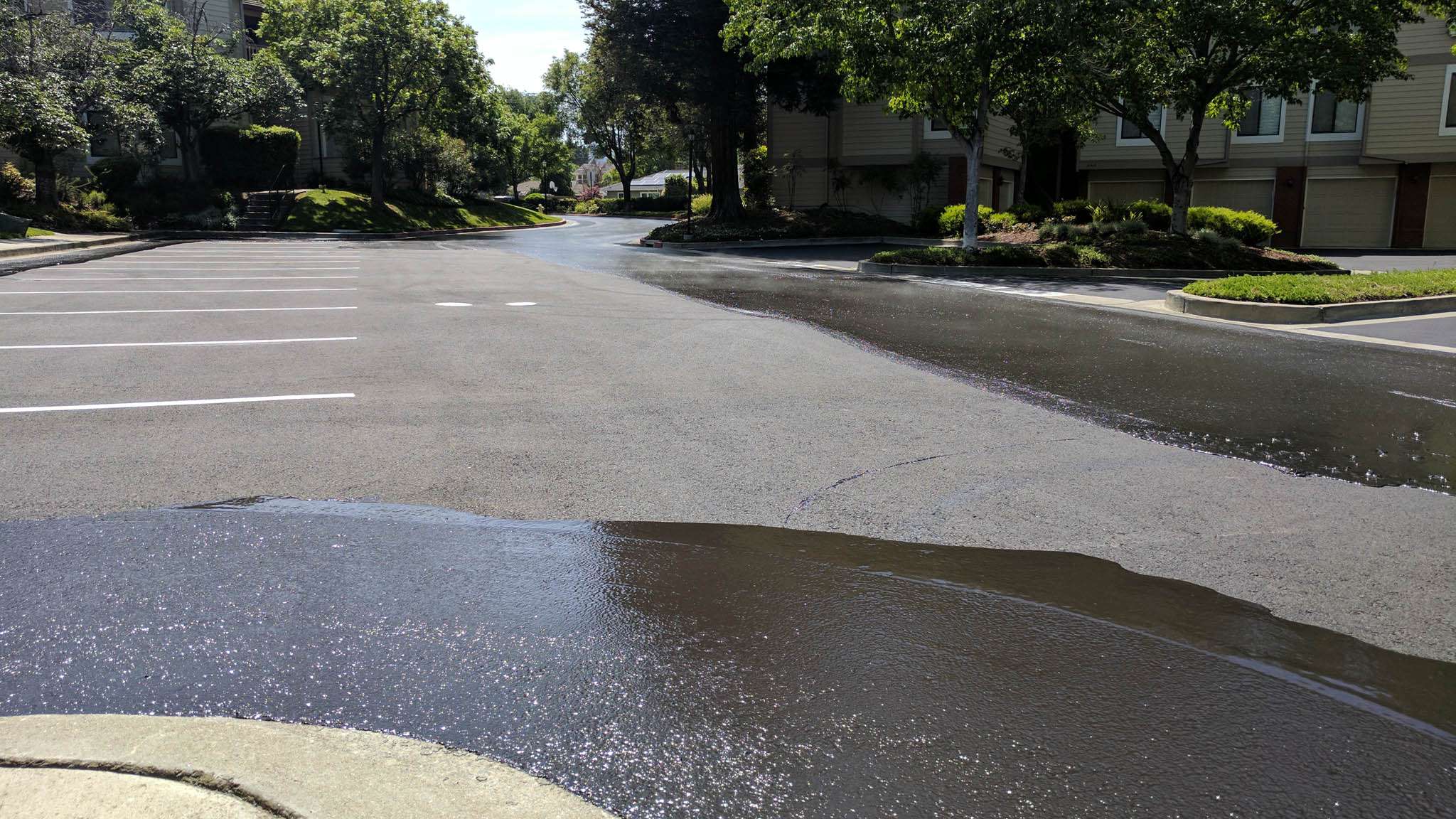
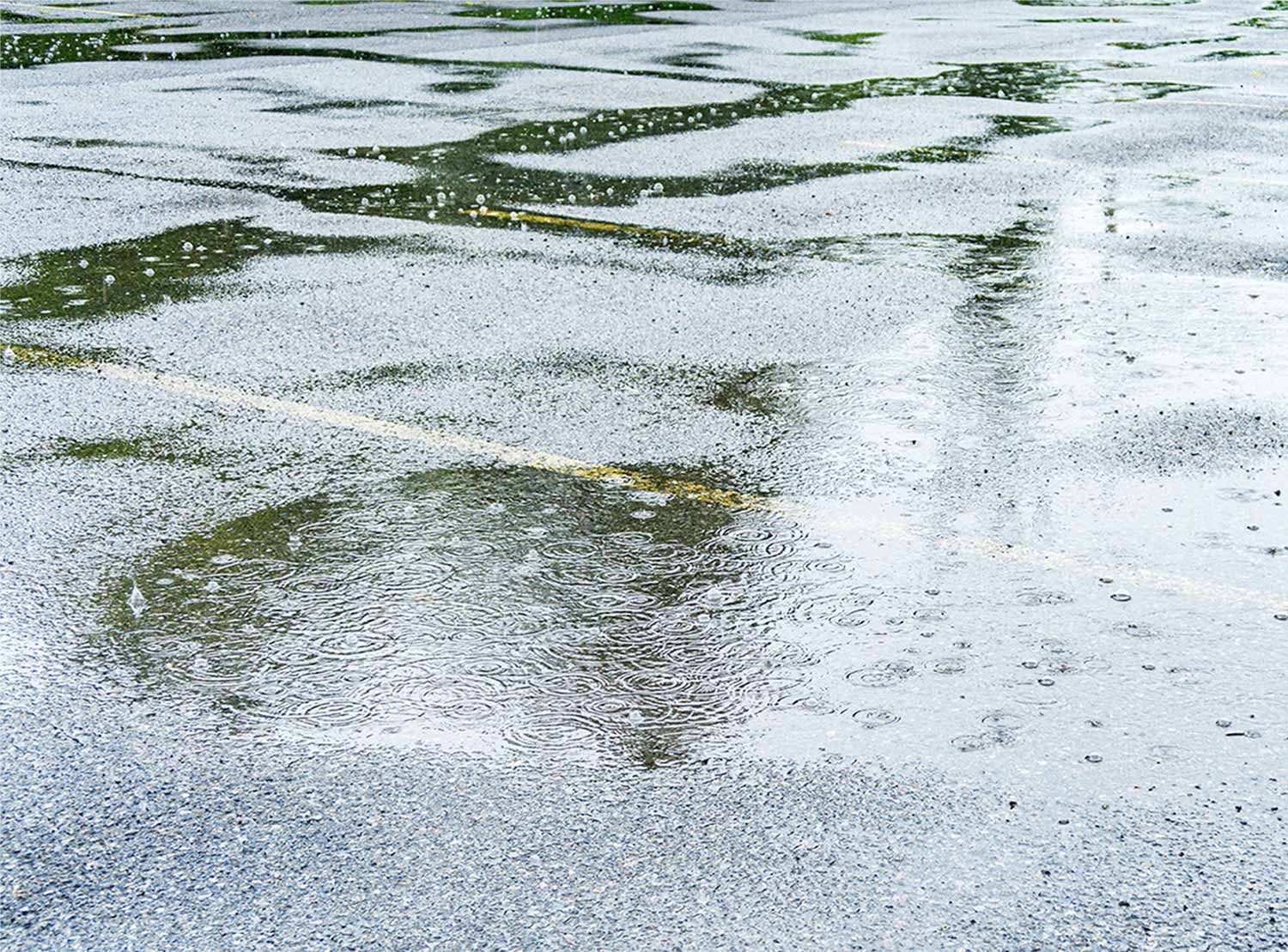
Low spots, blocked catch basins, and pavement that has settled over time can turn a heavy rain event into a standing water problem fast. Clogged catch basins and drain inlets are one of the most common causes of this, and one of the easiest to prevent. A buildup of leaves, sediment, or debris can turn a drainage system that works fine on paper into standing water on the ground. Clearing them before the wet season starts is a simple step that keeps the rest of the drainage system doing its job.Prolonged pooling or heavy rain saturates the base and strips the surface and protective coatings. It also creates genuine slip hazards for pedestrians crossing the lot. A slip-and-fall on a flooded, unmarked surface is exactly the kind of incident a documented maintenance record exists to prevent, and exactly the kind that becomes more likely when a wet season catches a property unprepared.
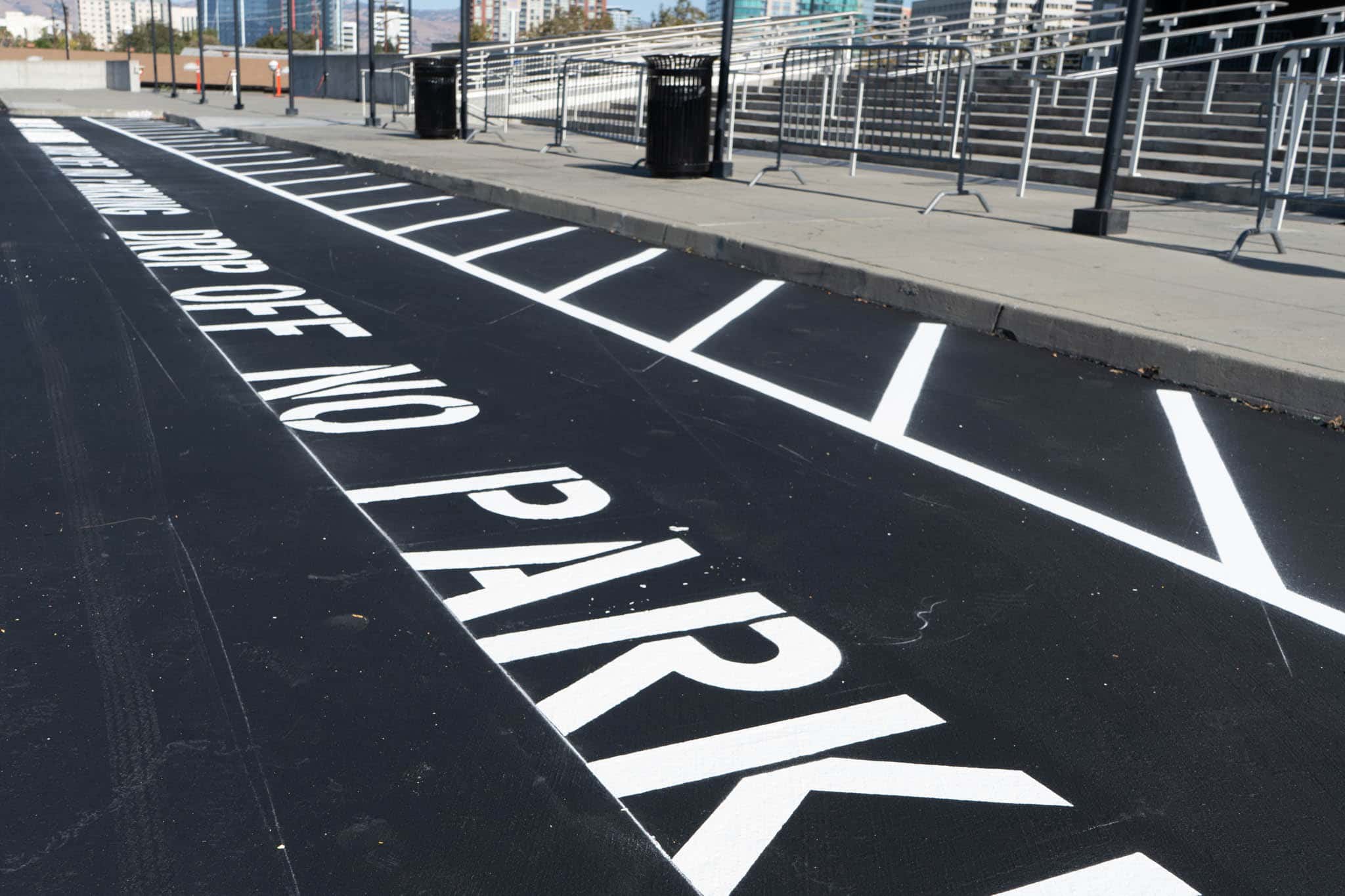
Rain reduces visibility across the entire lot. What is marginal on a dry day becomes a genuine hazard and liability risk once conditions deteriorate:
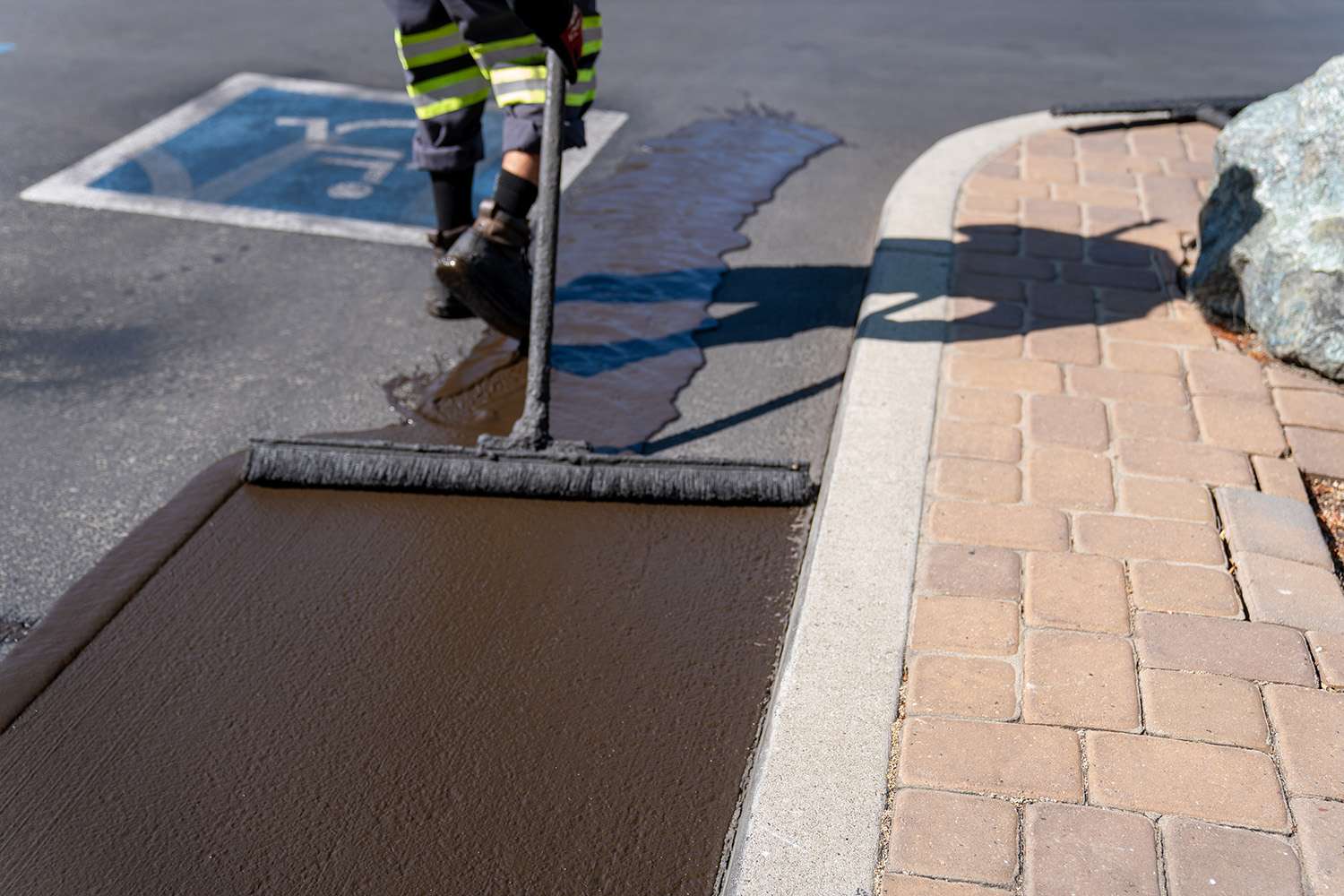
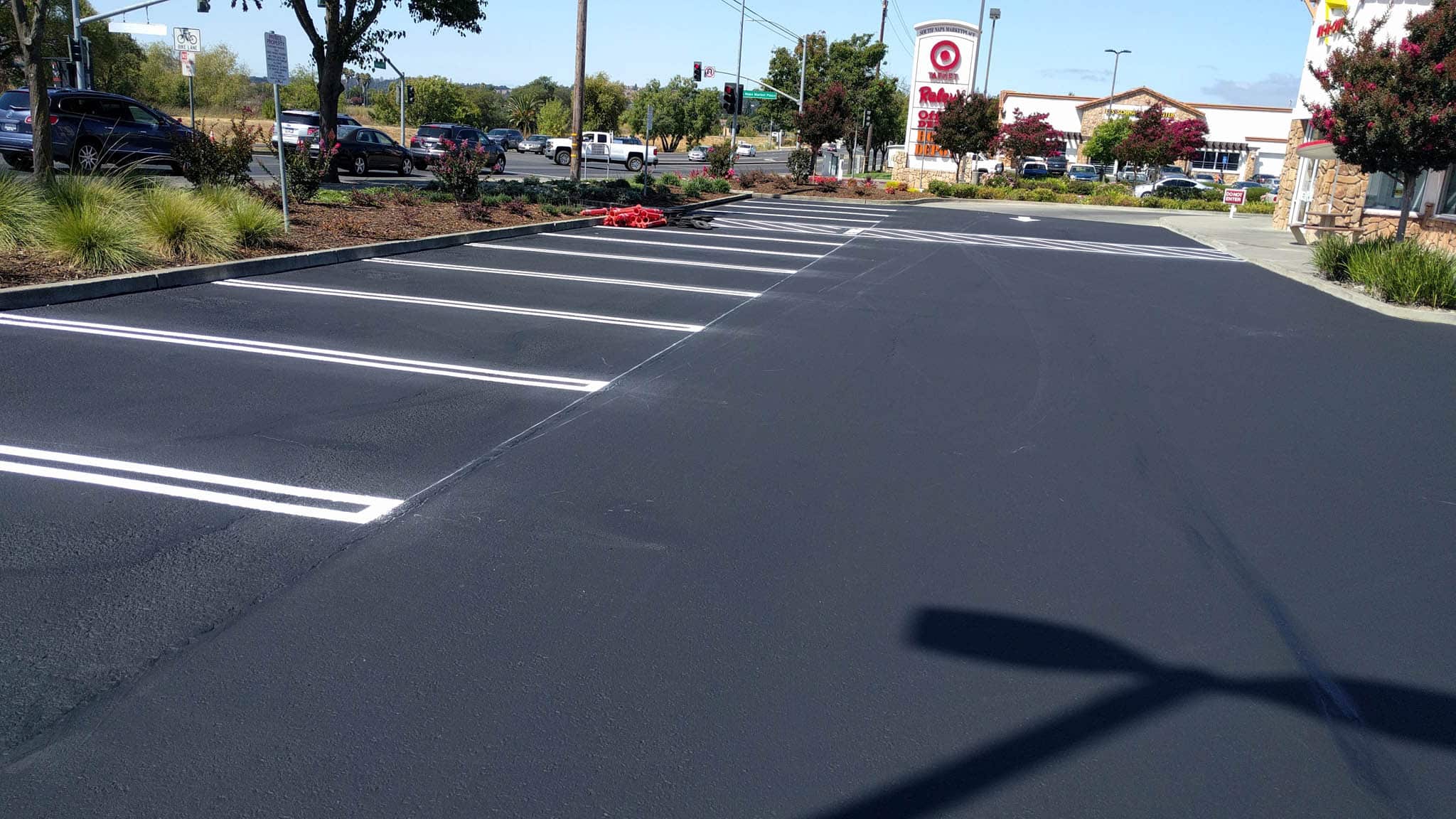
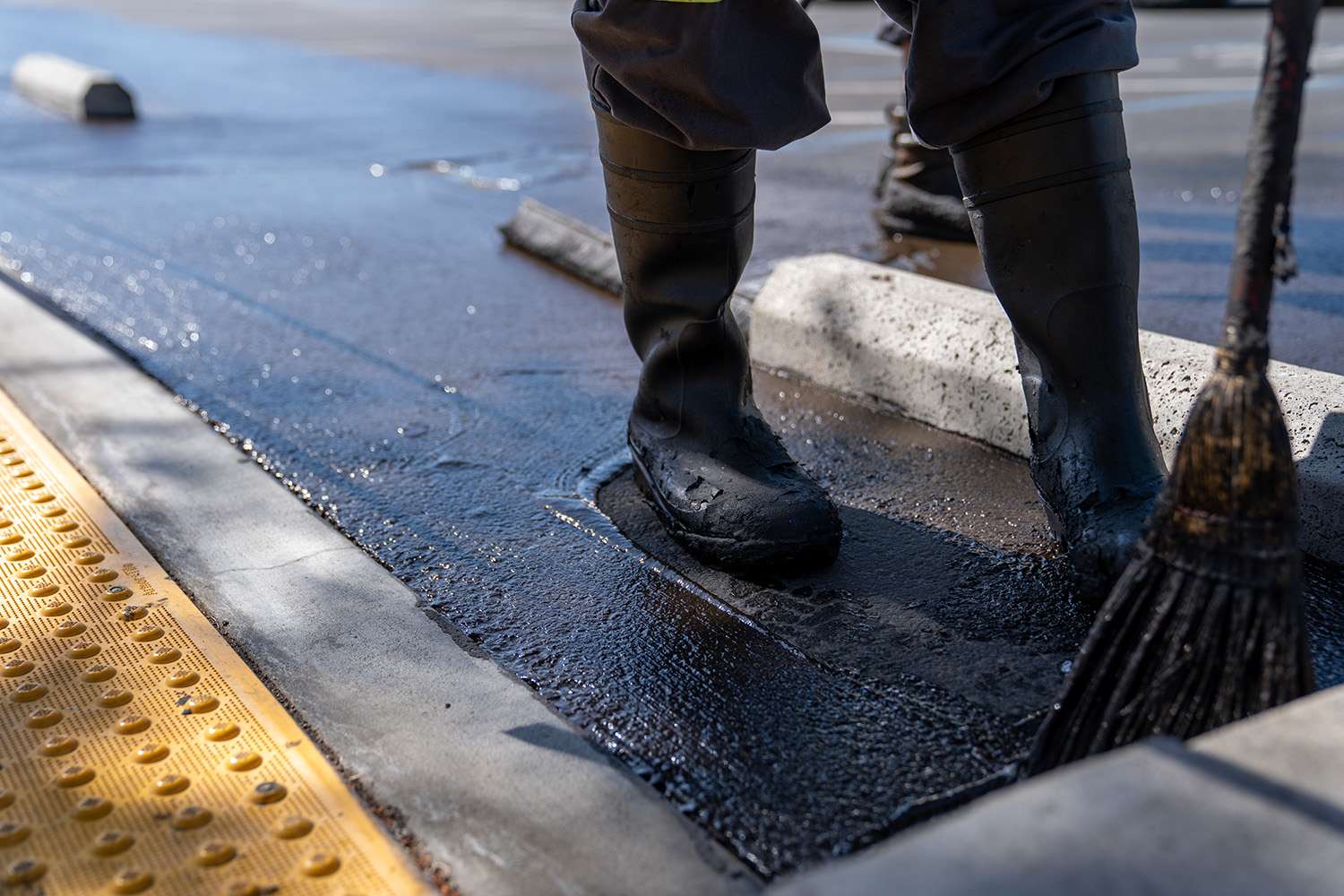
Sealcoating applied to qualifying pavement forms a protective barrier that slows water intrusion. It is not a structural repair and it cannot fix a failing base, but applied to sound pavement with cracks properly filled beforehand, it limits the surface entry points that allow water to reach the layers below and protects the surface from deterioration.
Three specific benefits matter most heading into a wet season:
Sealcoating requires sustained temperatures of 65 degrees Fahrenheit and rising to cure correctly. Applied in cold or wet conditions, it produces poor adhesion, uneven coverage, and a surface that will not perform as intended. For Bay Area properties, the viable window runs roughly from spring through early fall, before the first significant rain events of the season arrive.
Fall is the most critical time to act. Properties that are sealed and restriped before the wet season enter that season protected. Properties that miss the window wait until spring, absorbing whatever a strong El Niño season delivers in the meantime. That is not a small risk in a year when forecasters are already calling for significant rainfall.
If the sealcoating window has passed, the following can still be completed and should be treated as urgent:
Use this as a starting point when evaluating your property before the wet season:
El Niño does not create pavement problems. It accelerates the ones already there, and it does so on a timeline that leaves little room for delay. A slip-and-fall claim, a blocked fire lane during a storm, a structural repair that could have been a surface seal. These are the real costs of waiting.
If sealcoating is still on the table for your property, now is the time to schedule it. If that window has passed, prioritize asphalt repairs, crack filling, drainage, and restriping. Either way, a site assessment is where to start.
At Pacific Surfacing, we have been protecting Bay Area pavement for over 40 years. We look beyond the surface to assess what your property needs and plan the work around how it operates. Contact us to schedule a site assessment.
Building trust, long-term value, and accessible spaces for all.
 https://pacificsurfacing.com/wp-content/uploads/2026/04/PS_sustainable-asphalt_v3.jpg 1109 1500 hello@thepointcollective.com https://pacificsurfacing.com/wp-content/uploads/2025/09/PS_logo_rgb_notagline.png hello@thepointcollective.com2026-03-30 08:43:222026-09-10 10:59:22How to combine sealcoating + striping redesign to improve traffic flow and safety
 https://pacificsurfacing.com/wp-content/uploads/2026/03/DSC06745-scaled.jpg 1707 2560 hello@thepointcollective.com https://pacificsurfacing.com/wp-content/uploads/2025/09/PS_logo_rgb_notagline.png hello@thepointcollective.com2026-03-23 12:16:522026-09-10 11:04:47Preparing your pavement for sealcoating: Why proper prep work determines long-term results
 https://pacificsurfacing.com/wp-content/uploads/2026/03/DJI_0340_updated.jpg 1500 2000 hello@thepointcollective.com https://pacificsurfacing.com/wp-content/uploads/2025/09/PS_logo_rgb_notagline.png hello@thepointcollective.com2026-03-16 10:16:182026-09-10 11:06:34Preparing residents, tenants and employees for sealcoating day