Why it’s critical to recognize signs of asphalt damage
Asphalt is a versatile and durable paving material widely used in commercial applications, from parking lots and roadways to industrial facilities. Over time, even the best-maintained asphalt will show signs of wear due to weather, traffic, and other environmental factors. Understanding the difference between when to repair and when to replace asphalt is critical for property managers, business owners, and Homeowners Associations (HOAs) who oversee large-scale paved areas, especially in regions like the Bay Area, where unique climate challenges come into play.
In this article, we will help you identify the top signs of asphalt damage, understand the implications of different types of repairs, and weigh the costs and benefits of repair versus replacement in commercial settings.
Common signs of asphalt damage
Asphalt damage manifests in various forms. Recognizing these issues early can save you significant costs in the long term. Here are the top indicators to watch for:
1. Cracks
- Types of cracks:
- Hairline/surface cracks: Small cracks caused by surface wear, typically shallow and easy to repair.
- Alligator cracking: Interconnected cracks resembling reptile skin, often indicative of underlying structural failure.
- Edge cracking: Found along the edges of pavement, often caused by poor drainage or vegetation growth.
- What to do: Hairline cracks can be sealed, but alligator and edge cracking may require deeper structural repairs or replacement.
2. Potholes
- Potholes result from water infiltration, leading to erosion of the subbase. Over time, heavy commercial traffic exacerbates the issue.
- Potholes are a liability in commercial settings, posing risks to vehicles, pedestrians, and your bottom line.
- What to do: For isolated potholes, patching is a cost-effective solution. If multiple potholes appear in a concentrated area, consider replacement.
3. Uneven surfaces
- Causes: Poor installation, heavy equipment loads, or subsurface settling.
- Uneven surfaces create tripping hazards, drainage issues, and compliance concerns for businesses and HOAs.
- What to do: For minor unevenness, milling and overlay may suffice. Severe issues often necessitate full replacement.
4. Drainage problems
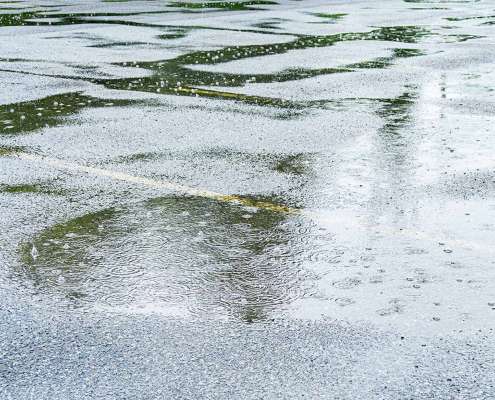
- Standing water on asphalt indicates poor drainage design or damaged pavement. In the Bay Area, winter rains can exacerbate these issues.
- Water infiltration weakens the pavement structure and accelerates cracking and pothole formation.
- What to do: Evaluate drainage systems. Seal cracks and resurface if the problem is localized. Widespread drainage failures may require regrading and replacement.
5. Fading and discoloration
- UV exposure and oxidation cause asphalt to fade from black to gray. While discoloration is not immediately structural, it signals a breakdown of the asphalt binder.
- Faded asphalt is more prone to cracking and water infiltration.
- What to do: Sealcoating can restore appearance and extend the life of the pavement. If paired with other damages, consider resurfacing.
Factors to consider: Repair vs. replace
Deciding between repair and replacement requires evaluating several factors, particularly for commercial properties with high traffic volumes and unique requirements:
1. Extent of damage
- Localized damage: Small cracks, potholes, or discoloration can often be addressed with targeted repairs like crack filling, patching, or sealcoating.
- Widespread damage: If 30-50% of the asphalt shows signs of failure, a full replacement may be more cost-effective in the long term.
2. Traffic load
- Commercial lots with heavy vehicle traffic, such as delivery trucks or industrial equipment, experience faster wear and tear. Repairs may not withstand repeated stress, necessitating replacement.
3. Lifespan of asphalt
- Asphalt surfaces typically last 15-20 years with proper maintenance. If your pavement is nearing the end of its life, replacement is likely the better option.
4. Budget and long-term costs
- Repairs are less expensive upfront but may lead to recurring maintenance costs if the underlying issues remain unresolved.
- Replacement has a higher initial cost but offers a fresh start with improved durability and performance.
5. Regulatory compliance
- ADA compliance and safety standards must be considered in commercial settings. Uneven surfaces, large cracks, or drainage issues can lead to non-compliance and potential legal risks.
6. Bay Area climate
- The Bay Area’s combination of mild winters and wet rainy seasons presents unique challenges. Rapid temperature changes and moisture can accelerate asphalt deterioration.
Considerations for HOAs
Homeowners Associations (HOAs) face distinct challenges compared to other commercial entities:
- Shared Spaces: Parking lots and private roads maintained by HOAs often experience moderate but consistent traffic. Repairs may suffice for small areas, but widespread damage requires careful assessment.
- Aesthetic Expectations: HOAs often prioritize the appearance of their pavement. Sealcoating and resurfacing can enhance curb appeal without the cost of full replacement.
- Budget Constraints: HOAs typically operate within a set budget, making cost-effective repairs more appealing. However, delaying necessary replacement can lead to higher costs in the long term.
- Vendor Selection: HOAs in the Bay Area should prioritize contractors familiar with local regulations and climate considerations.
Commercial applications: The Bay Area perspective
In the Bay Area, maintaining high-quality asphalt is essential due to environmental factors and business needs:
1. Environmental challenges
- The wet season exacerbates drainage issues, while summer heat stresses asphalt surfaces.
- Localized earthquakes can cause subsurface instability, increasing the risk of cracking and settling.
2. Business considerations
- Well-maintained pavement reflects positively on businesses, creating a safer and more welcoming environment for customers and employees.
- High-tech companies, shopping centers, and industrial complexes must balance aesthetics with functionality to protect their brand image and operational efficiency.
3. Urban and suburban needs
- Urban areas like San Francisco require durable pavements to handle heavy vehicle loads, while suburban areas face lower traffic but prioritize aesthetics for HOAs and retail centers.
Choosing the right contractor
Selecting an experienced contractor, like Pacific Surfacing, is critical for ensuring quality repairs or replacements in the Bay Area, here’s why:
- We understand the local climate challenges and drainage needs.
- We offer sustainable asphalt solutions, including recycled materials.
- We provide clear cost estimates and timelines to minimize disruptions.
- We have experience with commercial properties, industrial sites, and HOA-managed areas.
Conclusion
Asphalt damage is inevitable, but knowing when to repair or replace your pavement can save time, money, and headaches. Regular inspections, proactive maintenance, and expert guidance are essential for extending the life of your asphalt.
For Bay Area businesses and HOAs, balancing functionality, aesthetics, and cost-effectiveness is key to maintaining high-quality asphalt surfaces that meet the region’s unique demands. Whether addressing small cracks or planning a full replacement, an informed approach ensures the safety and longevity of your commercial property.


 https://pacificsurfacing.com/wp-content/uploads/2026/09/ps-what-el-nino-means-for-your-parking-lot.jpg 1109 1500 hello@thepointcollective.com https://pacificsurfacing.com/wp-content/uploads/2025/09/PS_logo_rgb_notagline.png hello@thepointcollective.com2026-09-28 11:44:372026-10-02 09:11:39What El Niño means for your parking lot
 https://pacificsurfacing.com/wp-content/uploads/2025/11/Asphalt-Lifespan.jpg 1229 1638 hello@thepointcollective.com https://pacificsurfacing.com/wp-content/uploads/2025/09/PS_logo_rgb_notagline.png hello@thepointcollective.com2025-11-11 10:09:142026-09-10 11:14:25Asphalt lifespan in the Bay Area: How long does pavement really last?
 https://pacificsurfacing.com/wp-content/uploads/2025/11/Commercial-Paving.jpg 1229 1638 hello@thepointcollective.com https://pacificsurfacing.com/wp-content/uploads/2025/09/PS_logo_rgb_notagline.png hello@thepointcollective.com2025-11-09 08:54:322026-09-10 11:19:06Commercial paving process: From site prep to final surface
 Asphalt paving in the winter
